


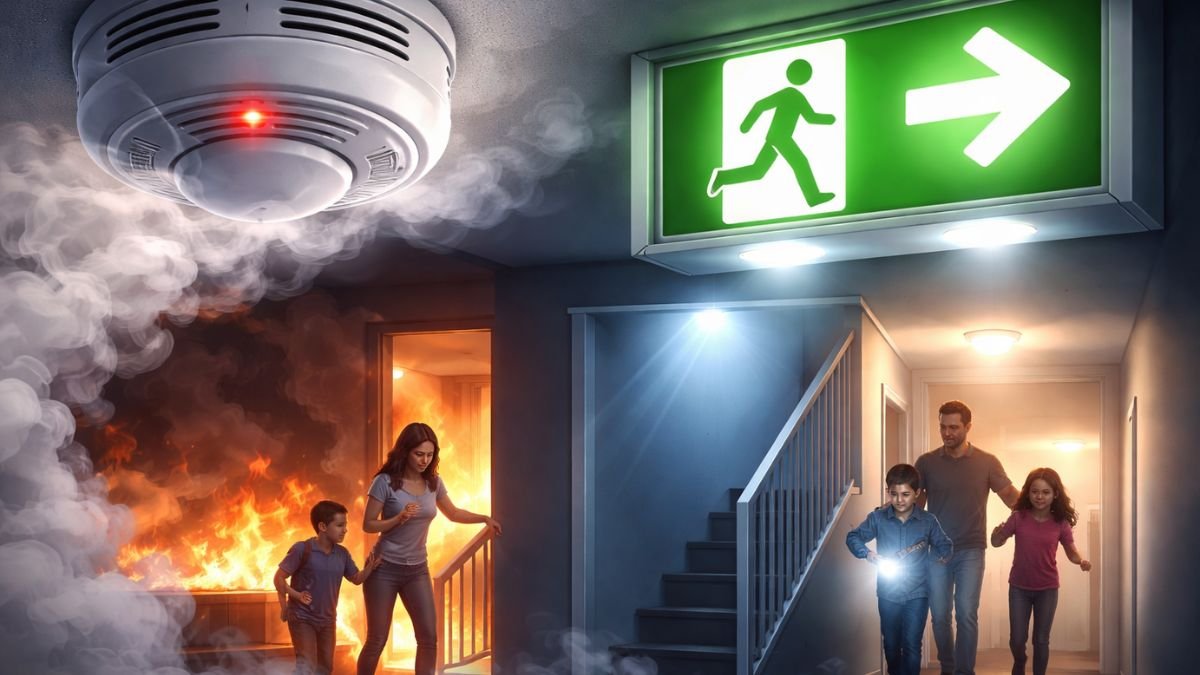
Safety is one of the most critical aspects of any home, workplace, or public building, yet it is often overlooked until an emergency occurs. Fires and power failures can happen unexpectedly, leaving very little time to react.
This is where smoke alarms and emergency lighting play a vital role. These two systems act as the first line of defense, providing early warnings and clear visibility during dangerous situations.


In 2026, with increasing electrical loads and urban living, ensuring proper safety measures like smoke detection and emergency lighting is not just recommended—it is essential.
This guide explains why these systems matter, how they work, and how you can maintain them for maximum protection.
What Are Smoke Alarms and Emergency Lighting?
1. Smoke Alarms Explained
Smoke alarms are devices designed to detect smoke particles in the air and trigger an audible alarm. They alert occupants of a potential fire before it spreads, giving valuable time to evacuate safely.
2. Emergency Lighting Explained
Emergency lighting systems automatically activate when the main power supply fails. These lights illuminate escape routes such as corridors, staircases, and exits, helping people navigate safely during emergencies.
Why Smoke Alarms Are Essential
1. Early Fire Detection
Detecting Fires Before They Spread
Smoke alarms can identify smoke in its early stages, often before flames become visible. This early detection significantly reduces the risk of injury and property damage.
Faster Response Time
The sooner occupants are alerted, the quicker they can evacuate or take action to control the fire.
2. Life-Saving Alerts
Audible Warnings During Sleep
Most fire incidents occur at night when people are asleep. Smoke alarms provide loud alerts that can wake occupants in time to escape.
Protection for Vulnerable Individuals
Children, elderly individuals, and people with disabilities benefit greatly from early warning systems.
3. Reduced Property Damage
Quick Intervention
Early alerts allow for faster firefighting responses, reducing damage to property and belongings.
Preventing Fire Spread
Detecting smoke early can prevent a small fire from becoming a large, uncontrollable blaze.
4. Compliance with Safety Regulations
Legal Requirements
Many countries require smoke alarms in residential and commercial properties.
Insurance Benefits
Homes equipped with smoke alarms often receive better insurance terms and coverage.
Why Emergency Lighting Is Crucial
1. Safe Evacuation During Power Failure
Illuminating Exit Routes
Emergency lighting ensures that hallways, staircases, and exits remain visible during blackouts.
Preventing Panic
Clear visibility reduces confusion and panic during emergencies.
2. Improved Workplace Safety
Supporting Employees and Visitors
In commercial spaces, emergency lighting helps guide people to safety efficiently.
Reducing Liability Risks
Proper safety systems can help businesses avoid legal consequences in case of emergencies.
3. Compliance and Legal Standards
Building Safety Codes
Emergency lighting is mandatory in many commercial and public buildings.
Regular Testing Requirements
Regulations often require periodic testing to ensure functionality.
4. Backup Power Reliability
Battery-Operated Systems
Most emergency lights have backup batteries that activate automatically.
Consistent Performance
Reliable systems ensure lighting remains available even during extended outages.
Types of Smoke Alarms
1. Ionization Smoke Alarms
Best for Fast-Flaming Fires
These alarms respond quickly to fires that produce little visible smoke.
Common Usage
Often installed in kitchens and living areas.
2. Photoelectric Smoke Alarms
Best for Smoldering Fires
These are more effective at detecting slow-burning fires with heavy smoke.
Ideal Placement
Bedrooms and hallways are common installation areas.
3. Dual-Sensor Smoke Alarms
Combined Technology
These alarms use both ionization and photoelectric sensors for comprehensive detection.
Maximum Protection
They provide the highest level of safety for homes and businesses.
Types of Emergency Lighting Systems
1. Maintained Emergency Lighting
Continuous Operation
These lights remain on at all times and switch to battery power during outages.
Common in Public Spaces
Used in theaters, malls, and large buildings.
2. Non-Maintained Emergency Lighting
Activated Only During Power Failure
These lights remain off during normal conditions and turn on during outages.
Suitable for Offices and Homes
Ideal for areas where constant lighting is not required.
3. Self-Contained Emergency Lights
Built-In Batteries
Each unit operates independently with its own power source.
Easy Installation
Commonly used in residential and small commercial properties.
4. Central Battery Systems
Single Power Source
A central system powers multiple emergency lights.
Large-Scale Applications
Used in hospitals, airports, and industrial facilities.
Proper Placement of Smoke Alarms and Emergency Lighting
1. Smoke Alarm Placement
Install in Bedrooms
Every bedroom should have a smoke alarm for maximum safety.
Place in Hallways
Hallways connecting sleeping areas should also have alarms.
Avoid Dead Air Spaces
Install alarms on ceilings or high walls where smoke can easily reach.
2. Emergency Lighting Placement
Near Exit Points
Lights should be installed near doors and exits.
Along Escape Routes
Corridors and staircases must be well-lit during emergencies.
In Large Rooms
Ensure visibility across open spaces to guide evacuation.
Maintenance and Testing
1. Smoke Alarm Maintenance
Test Monthly
Press the test button regularly to ensure functionality.
Replace Batteries
Change batteries at least once a year or when low battery signals occur.
Clean Regularly
Dust and debris can affect sensor performance.
2. Emergency Lighting Maintenance
Monthly Function Test
Ensure lights activate properly during simulated power failure.
Annual Full Duration Test
Check if lights stay on for the required duration.
Battery Replacement
Replace batteries as per manufacturer guidelines.
Common Mistakes to Avoid
1. Ignoring Maintenance
Neglecting regular checks can render safety systems useless during emergencies.
2. Improper Installation
Incorrect placement reduces effectiveness.
3. Using Low-Quality Devices
Cheap products may fail when needed most.
4. Disabling Alarms
Turning off alarms due to nuisance alerts can be extremely dangerous.
Benefits of Installing Smoke Alarms and Emergency Lighting
These systems provide peace of mind and significantly reduce risks. They enhance safety, ensure compliance with regulations, and protect both lives and property. In emergencies, they can mean the difference between a safe escape and a tragic outcome.
When Should You Upgrade Your Safety Systems?
If your smoke alarms are older than 10 years or your emergency lighting system shows signs of failure, it’s time for an upgrade. Modern systems offer improved sensitivity, longer battery life, and better reliability.
The importance of smoke alarms and emergency lighting cannot be overstated. These systems are essential for protecting lives and minimizing damage during emergencies.
While smoke alarms provide early warnings of fire, emergency lighting ensures safe evacuation during power failures. Together, they create a comprehensive safety solution for homes and businesses.
Regular maintenance, proper installation, and timely upgrades are key to ensuring these systems work effectively when needed most. Investing in these safety measures is not just a precaution—it is a necessity for every responsible property owner.
FAQs
1. How often should smoke alarms be tested?
Smoke alarms should be tested at least once a month to ensure they are working properly.
2. Do emergency lights work during long power outages?
Yes, most systems use backup batteries designed to last for a specific duration, usually 1–3 hours.
3. Can I install smoke alarms myself?
Basic installation is possible, but professional installation ensures correct placement and compliance with safety standards.