
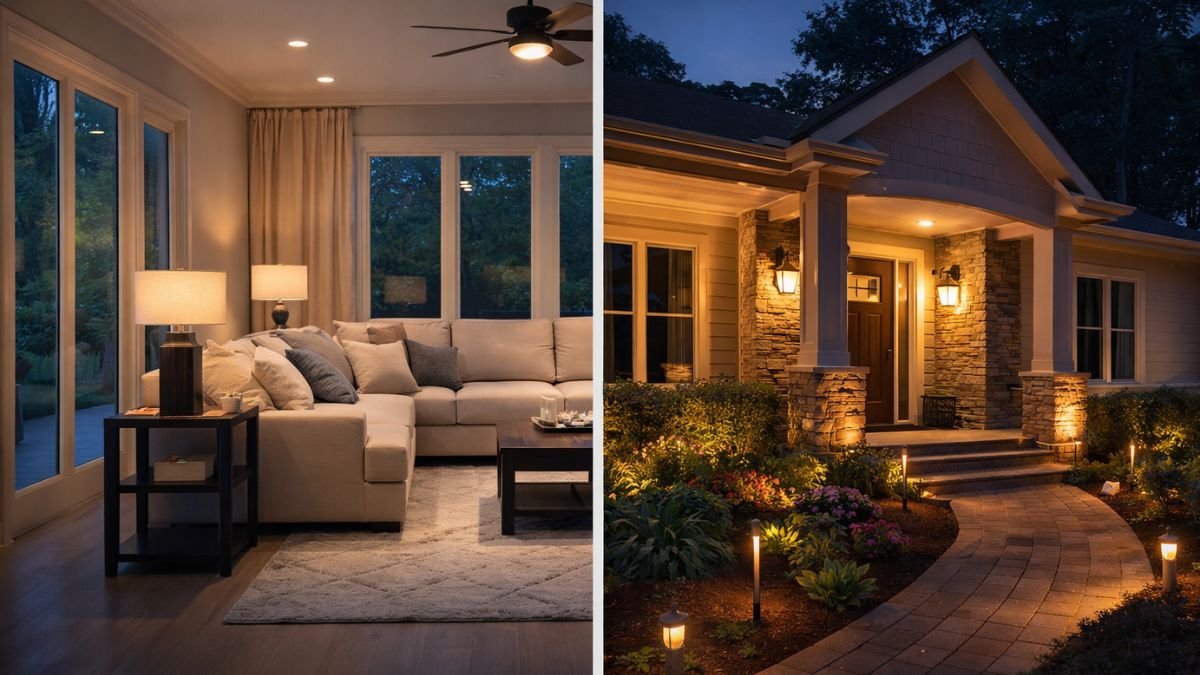
Lighting plays a crucial role in shaping the look, feel, and functionality of your home. Whether you are designing a cozy indoor space or enhancing your outdoor areas, the right lighting choices can transform your environment dramatically.
However, indoor and outdoor lighting serve different purposes, require different fixtures, and must be planned carefully to achieve the best results.

Understanding how each type works will help you create a balanced, efficient, and visually appealing lighting setup for your home.
In this comprehensive guide, we will explore the differences between indoor and outdoor lighting, their benefits, ideal applications, and how to choose the best option for your needs.
Understanding Indoor Lighting
Indoor lighting focuses on illuminating interior spaces while enhancing comfort, productivity, and aesthetics. It is designed to suit daily activities such as reading, cooking, relaxing, and working.
1. Types of Indoor Lighting

Indoor lighting is typically divided into three main categories:
Ambient Lighting
This is the primary source of light in a room. It provides overall illumination and ensures visibility. Common examples include ceiling lights, chandeliers, and recessed lighting.
Task Lighting
Task lighting is used for specific activities like reading, cooking, or working. Desk lamps, under-cabinet lights, and vanity lights fall into this category.

Accent Lighting
Accent lighting highlights specific features such as artwork, architectural details, or decorative elements. Spotlights and wall-mounted fixtures are commonly used.
2. Benefits of Indoor Lighting
Proper indoor lighting offers several advantages:
- Improves visibility and comfort
- Enhances interior design and ambiance
- Supports productivity and daily tasks
- Reduces eye strain
- Creates a welcoming atmosphere
3. Best Indoor Lighting Options for Each Room
Living Room
Use a combination of ambient and accent lighting to create a cozy and inviting environment.
Kitchen
Bright task lighting is essential for cooking and food preparation, along with ambient lighting for overall visibility.
Bedroom
Soft, warm lighting helps create a relaxing atmosphere. Bedside lamps are ideal for reading.
Bathroom
Use bright, even lighting around mirrors for grooming tasks.
Home Office
Task lighting combined with ambient lighting improves focus and reduces fatigue.
Understanding Outdoor Lighting
Outdoor lighting is designed to illuminate exterior spaces such as gardens, pathways, driveways, and patios. It focuses on safety, security, and enhancing curb appeal.
1. Types of Outdoor Lighting
Security Lighting
These lights are used to deter intruders and improve safety. Motion-sensor lights are commonly used for this purpose.
Landscape Lighting
Landscape lighting highlights outdoor features like plants, trees, and water elements.
Pathway Lighting
These lights guide movement along walkways and driveways, improving visibility at night.
Decorative Lighting
String lights, lanterns, and wall-mounted fixtures enhance the aesthetic appeal of outdoor spaces.
2. Benefits of Outdoor Lighting
Outdoor lighting provides several important benefits:
- Improves safety and reduces accidents
- Enhances home security
- Increases property value
- Extends usability of outdoor spaces
- Adds visual appeal to your home
3. Best Outdoor Lighting Applications
Garden Areas
Use soft landscape lighting to highlight plants and create a peaceful ambiance.
Driveways
Install bright lights for better visibility and safety.
Patios and Decks
Warm decorative lighting creates a comfortable outdoor living space.
Entrances
Well-lit entryways improve security and make your home more welcoming.
Key Differences Between Indoor and Outdoor Lighting
Understanding the differences between indoor and outdoor lighting helps in making informed decisions.
1. Purpose and Function
Indoor lighting focuses on comfort, productivity, and aesthetics, while outdoor lighting prioritizes safety, security, and visibility.
2. Durability and Materials
Outdoor lighting fixtures are designed to withstand weather conditions such as rain, heat, and dust, whereas indoor fixtures are not exposed to such elements.
3. Brightness Levels
Outdoor lighting generally requires higher brightness for safety and visibility, while indoor lighting often uses softer tones for comfort.
4. Installation Requirements
Outdoor lighting may require waterproof wiring and specialized installation techniques, while indoor lighting is typically simpler to install.
5. Energy Efficiency Considerations
Both indoor and outdoor lighting can benefit from energy-efficient options like LED lights, but outdoor systems often include solar-powered solutions.
Choosing the Right Lighting for Your Home
Selecting the best lighting involves considering your needs, space, and design preferences.
1. Assess Your Space
Evaluate the size, layout, and purpose of each area in your home to determine lighting requirements.
2. Balance Function and Aesthetics
Choose lighting that not only looks good but also serves its intended purpose effectively.
3. Consider Energy Efficiency
Opt for LED or solar lighting to reduce energy consumption and save on electricity bills.
4. Layer Your Lighting
Combine different types of lighting to create depth and flexibility in your space.
5. Focus on Safety
Ensure proper lighting in areas like staircases, pathways, and entrances to prevent accidents.
Indoor Lighting Design Tips
1. Use Warm and Cool Light Strategically
Warm light creates a cozy atmosphere, while cool light is better for task-oriented spaces.
2. Install Dimmers
Dimmers allow you to adjust brightness levels according to your needs.
3. Highlight Key Features
Use accent lighting to draw attention to artwork or architectural details.
4. Avoid Overlighting
Too much light can make a space uncomfortable. Balance is key.
Outdoor Lighting Design Tips
1. Use Motion Sensors for Security
Motion-sensor lights enhance security and save energy.
2. Highlight Landscaping
Strategically placed lights can make your garden look stunning at night.
3. Choose Weather-Resistant Fixtures
Ensure your outdoor lights are designed to withstand environmental conditions.
4. Avoid Light Pollution
Direct light downward and use shields to minimize glare and environmental impact.
Common Mistakes to Avoid
1. Ignoring Lighting Layers
Relying on a single light source can make spaces look flat and uninviting.
2. Choosing the Wrong Brightness
Too bright or too dim lighting can affect comfort and functionality.
3. Poor Placement of Fixtures
Incorrect placement can lead to shadows or uneven lighting.
4. Neglecting Maintenance
Regular cleaning and maintenance are essential for optimal performance.
Cost Considerations for Indoor vs Outdoor Lighting
1. Installation Costs
Outdoor lighting installations may be more expensive due to weatherproofing and wiring requirements.
2. Energy Costs
LED and solar options can significantly reduce long-term energy expenses.
3. Maintenance Costs
Outdoor lighting may require more frequent maintenance due to exposure to the elements.
Indoor and outdoor lighting both play essential roles in creating a functional and attractive home. While indoor lighting focuses on comfort, productivity, and ambiance, outdoor lighting enhances safety, security, and curb appeal.
The key to achieving the best results lies in understanding the differences between the two and selecting the right combination for your needs.
By carefully planning your lighting design, using energy-efficient options, and avoiding common mistakes, you can create a well-lit home that is both beautiful and practical.
FAQs
1. Can I use indoor lights outdoors?
No, indoor lights are not designed to withstand weather conditions and can become hazardous if used outside.
2. What is the best type of lighting for energy efficiency?
LED lights are the most energy-efficient option for both indoor and outdoor use.
3. How can I improve security with outdoor lighting?
Install motion-sensor lights and ensure all entry points and pathways are well-lit.