
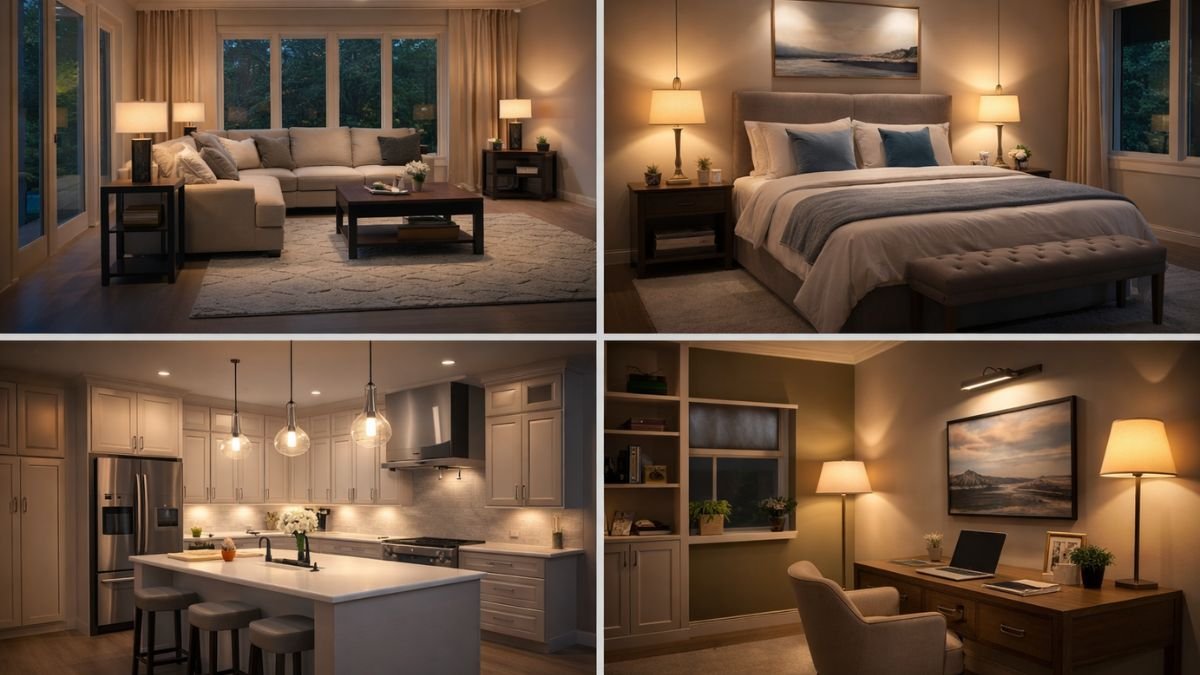
Lighting is one of the most powerful yet often overlooked elements in home design. It affects not only how your home looks but also how it feels and functions.
The right lighting can transform a dull space into a warm, inviting environment, improve productivity, and even influence your mood.

Designing perfect home lighting for every room requires a thoughtful combination of functionality, aesthetics, and layering techniques. In this comprehensive guide, you will learn how to create effective lighting plans for each room in your home.
Understanding the Basics of Home Lighting
Before diving into room-specific strategies, it is important to understand the three main types of lighting used in interior design.
1. Ambient Lighting
Ambient lighting is the primary source of light in a room. It provides overall illumination and ensures that the space is evenly lit. Common sources include ceiling lights, chandeliers, and recessed lighting.
2. Task Lighting

Task lighting is focused lighting used for specific activities such as reading, cooking, or working. Examples include desk lamps, under-cabinet lights, and vanity lights.
3. Accent Lighting
Accent lighting is used to highlight specific features such as artwork, architectural elements, or decorative pieces. It adds depth and visual interest to a room.
A well-designed lighting plan combines all three types to create a balanced and functional space.
Key Principles of Good Lighting Design
1. Layer Your Lighting

Using multiple layers of light creates flexibility and enhances the overall atmosphere of a room.
2. Consider Room Function
Different rooms require different lighting setups depending on how they are used.
3. Use the Right Brightness
Brightness levels should match the purpose of the room. For example, kitchens need brighter lighting than bedrooms.
4. Choose the Right Color Temperature
Warm light creates a cozy atmosphere, while cool light is better for tasks and productivity.
5. Control with Dimmers
Dimmers allow you to adjust lighting levels according to mood and time of day.
How to Design Lighting for the Living Room
The living room is a multifunctional space used for relaxation, entertainment, and socializing. Lighting should be flexible and layered.
1. Ambient Lighting Setup
Use ceiling fixtures or recessed lights to provide overall illumination.
2. Task Lighting for Activities
Add floor lamps or table lamps near seating areas for reading or other activities.
3. Accent Lighting for Style
Highlight artwork, shelves, or decorative elements using accent lights.
4. Use Dimmers for Flexibility
Adjust lighting levels to suit different occasions, from movie nights to gatherings.
How to Design Lighting for the Bedroom
The bedroom should feel calm and relaxing, so lighting should be soft and soothing.
1. Soft Ambient Lighting
Use warm, diffused lighting to create a cozy atmosphere.
2. Bedside Task Lighting
Install bedside lamps or wall-mounted lights for reading.
3. Accent Lighting for Ambience
Use subtle lighting behind headboards or under furniture for a modern touch.
4. Avoid Harsh Lighting
Stay away from overly bright or cool-toned lights that can disrupt relaxation.
How to Design Lighting for the Kitchen
The kitchen requires bright and functional lighting for cooking and food preparation.
1. Bright Ambient Lighting
Use ceiling lights or recessed lighting to ensure the entire space is well-lit.
2. Task Lighting for Work Areas
Install under-cabinet lights to illuminate countertops and cooking areas.
3. Pendant Lighting for Style
Add pendant lights above islands or dining areas for both function and design.
4. Focus on Safety
Ensure there are no dark spots that could cause accidents while cooking.
How to Design Lighting for the Bathroom
Bathroom lighting should be both practical and flattering.
1. Even Ambient Lighting
Use ceiling lights to provide general illumination.
2. Task Lighting for Mirrors
Install lights on either side of mirrors to reduce shadows on the face.
3. Accent Lighting for Relaxation
Add soft lighting for a spa-like atmosphere.
4. Use Moisture-Resistant Fixtures
Ensure all fixtures are suitable for humid environments.
How to Design Lighting for the Dining Room
Dining room lighting should create a warm and inviting atmosphere.
1. Central Lighting Fixture
Use a chandelier or pendant light above the dining table.
2. Adjustable Brightness
Install dimmers to adjust lighting for different occasions.
3. Accent Lighting for Decor
Highlight artwork or architectural features to enhance the room’s appeal.
4. Maintain Proper Height
Ensure hanging lights are positioned at the correct height for comfort and aesthetics.
How to Design Lighting for Home Office
A well-lit home office improves productivity and reduces eye strain.
1. Bright Ambient Lighting
Ensure the room is evenly lit with ceiling fixtures.
2. Task Lighting for Work
Use a desk lamp with adjustable brightness for focused work.
3. Reduce Glare
Position lights to avoid reflections on screens.
4. Use Cool Light for Focus
Cool white light enhances concentration and alertness.
How to Design Lighting for Hallways and Entryways
These areas often get overlooked but play an important role in overall lighting design.
1. Consistent Ambient Lighting
Use ceiling lights to ensure safe navigation.
2. Accent Lighting for Style
Add wall sconces or decorative fixtures for visual interest.
3. Highlight Architectural Features
Use lighting to draw attention to unique elements.
4. Ensure Adequate Brightness
Avoid dim lighting that can make these areas feel uninviting.
Choosing the Right Bulbs
1. LED Bulbs
Energy-efficient and long-lasting, making them a popular choice.
2. Color Temperature Options
Warm white for relaxation, cool white for tasks, and daylight for clarity.
3. Brightness Levels
Measured in lumens, higher lumens mean brighter light.
4. Smart Bulbs
Allow remote control and customization through apps.
Smart Lighting Solutions for Modern Homes
1. Voice-Controlled Systems
Control lighting using voice assistants for convenience.
2. Automated Schedules
Set lighting to turn on or off at specific times.
3. Mood Lighting
Change colors and brightness to match your mood.
4. Energy Efficiency
Smart systems help reduce energy consumption.
Common Lighting Mistakes to Avoid
1. Relying on a Single Light Source
This can create shadows and uneven lighting.
2. Ignoring Natural Light
Maximize natural light during the day.
3. Using Incorrect Bulb Types
Different rooms require different lighting temperatures.
4. Poor Placement of Fixtures
Improper placement can reduce effectiveness.
5. Overlooking Dimmers
Dimmers provide flexibility and enhance comfort.
Tips for Creating a Balanced Lighting Plan
1. Combine Different Lighting Types
Use ambient, task, and accent lighting together.
2. Plan Ahead
Consider lighting during the design stage of your home.
3. Test Before Finalizing
Experiment with different lighting setups.
4. Focus on Functionality
Ensure lighting meets the practical needs of each room.
Designing perfect home lighting for every room is about creating a balance between functionality and aesthetics. By understanding the different types of lighting and applying them strategically, you can transform your home into a comfortable, efficient, and visually appealing space.
Each room has unique lighting requirements, and tailoring your approach accordingly ensures the best results. From cozy bedrooms to functional kitchens and productive home offices, the right lighting enhances every aspect of your daily life.
Investing time in proper lighting design not only improves your home’s appearance but also boosts comfort, safety, and overall well-being.
FAQs
1. What is the best type of lighting for a living room?
A combination of ambient, task, and accent lighting works best to create a flexible and inviting space.
2. How can I make my home lighting more energy-efficient?
Use LED bulbs, install dimmers, and consider smart lighting systems to reduce energy consumption.
3. What color temperature is ideal for bedrooms?
Warm white light is ideal as it creates a relaxing and comfortable atmosphere.